Built to Last: Why Investing in Premium Exterior Materials Saves Money Over Time
Building or buying a home is one of the largest financial investments you will ever make.
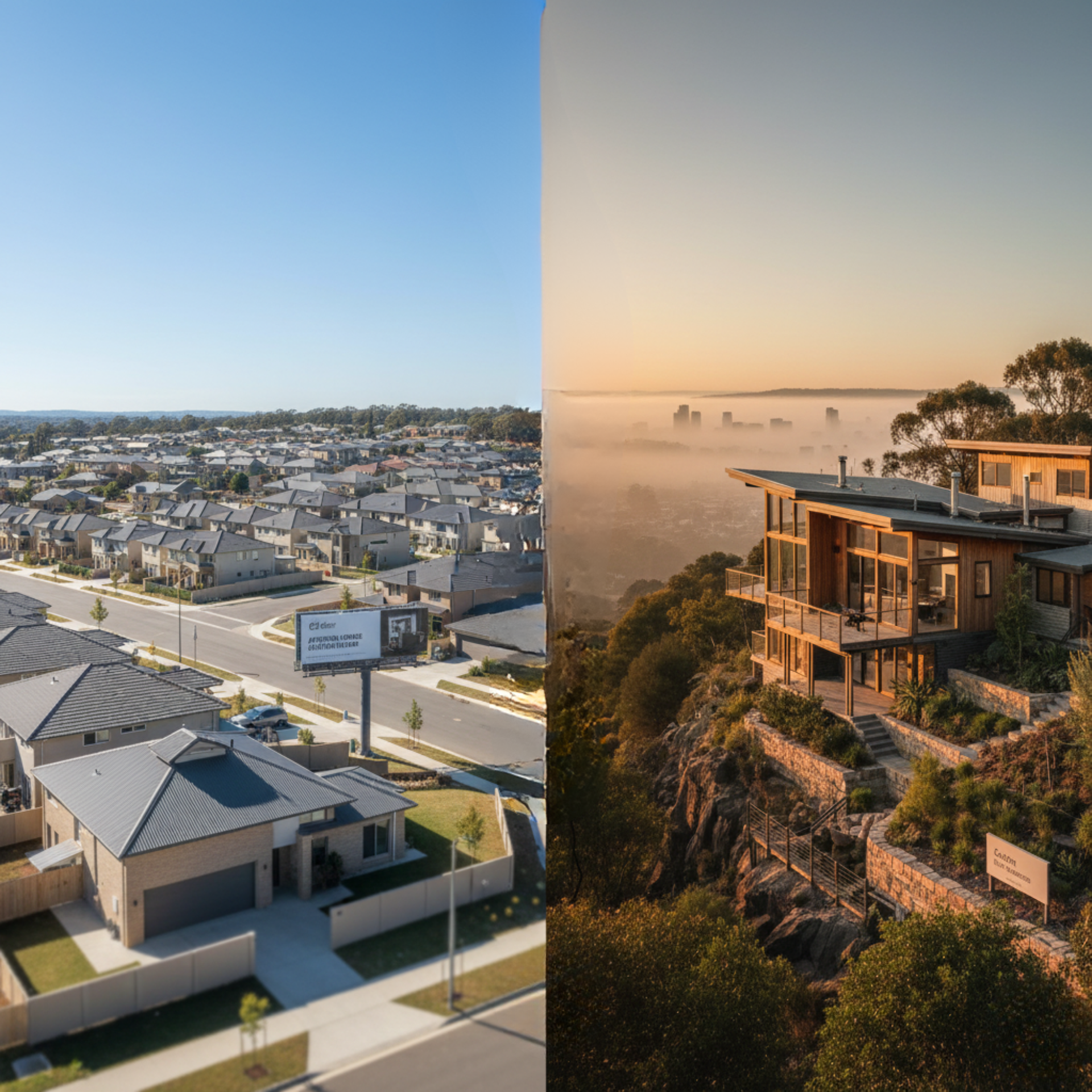
When you are looking at home plans, visiting open houses, or sitting down to budget for a custom build, it is completely natural to look for ways to keep costs manageable. On paper, picking lower-cost exterior building materials often looks like an easy way to shave thousands of dollars off your upfront price tag.
However, your home’s exterior—its shell—has a demanding job. It works 24 hours a day, 365 days a year, to protect your family and your interior living space from rain, wind, blistering sun, freezing temperatures, and pests.
When you choose cheaper exterior materials, the initial savings can quickly vanish, replaced by frequent repairs, high utility bills, constant maintenance, and premature replacement costs. On the other hand, investing in high-quality exterior materials pays you back year after year.
Here is a clear look at why choosing premium exterior materials—specifically in cladding, insulation, and roofing—is actually the smartest, most budget-friendly decision you can make for the long run.
Understanding the "Initial Cost vs. Total Lifetime Cost" Mindset
To understand why premium materials save money, it helps to look at home construction through a concept known as Total Lifetime Cost.
- Initial Cost is what you pay today to purchase and install a material.
- Lifetime Cost includes the initial price PLUS everything you spend on that material over the next 20 to 50 years. This includes maintenance, cleaning, repainting, energy bills, emergency repairs, and full replacements.
A cheap material might cost less on day one, but if it requires repainting every five years, leaks during a storm, or lets conditioned air escape your house, its lifetime cost ends up being far higher than a premium alternative.
1. Wall Cladding: Premium Siding vs. Bargain Options
Cladding is simply the exterior skin or armor of your home. It gives your home its visual style while shielding the structural frame from moisture and weather.
The Budget Route: Standard Vinyl Siding or Cheap Wood
Standard, low-grade vinyl siding is popular because it is cheap and quick to install. However, budget vinyl is thin. Over time, sunlight causes it to crack, fade, and warp. Strong winds can rip panels off, and cold winter weather makes it brittle and easy to puncture with a lawnmower or heavy hail.
Untreated or low-grade wood cladding looks beautiful at first, but it is high-maintenance. Wood absorbs moisture, leading to rot, warping, and termite damage. To keep it protected, you must scrape, seal, and repaint it every 3 to 7 years—an ongoing expense that costs thousands of dollars over time.
The Premium Choice: Fiber Cement, Engineered Wood, or Masonry
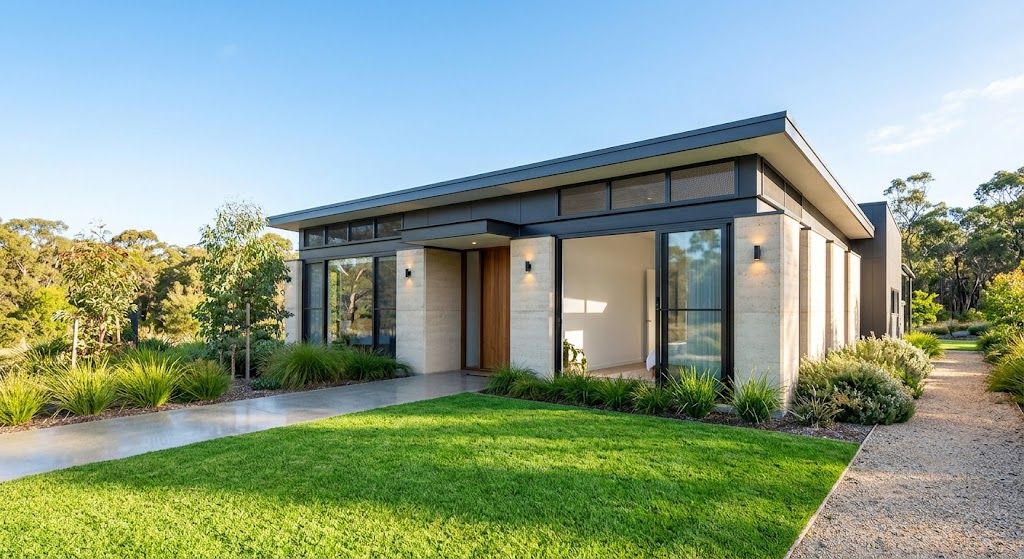
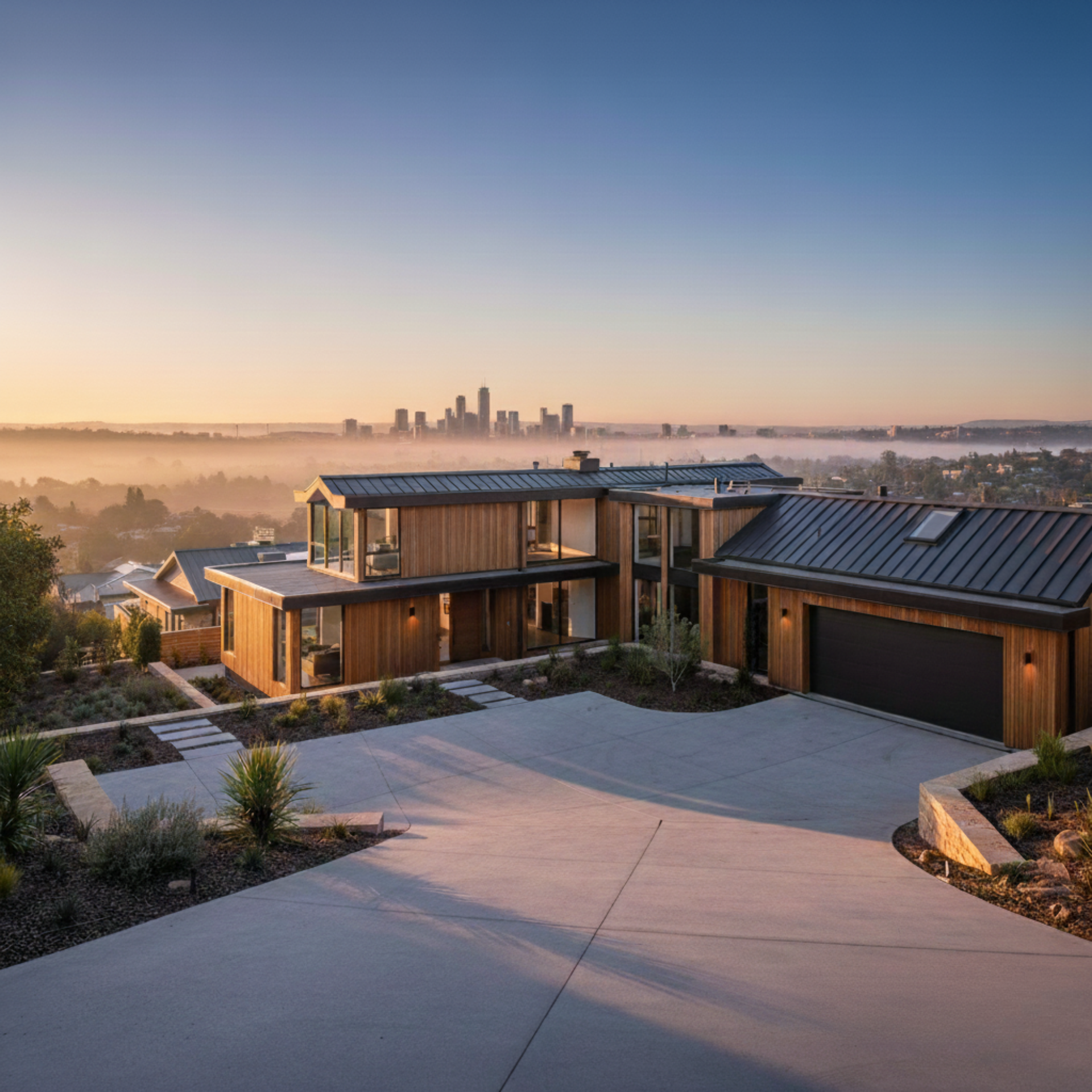
Premium cladding options—such as fiber cement siding (a durable blend of wood pulp, sand, and cement), engineered wood, or natural stone and brick—are built to endure extreme weather without breaking down.
- Rot and Pest Resistance: Fiber cement and masonry do not rot, and insects like termites cannot eat them.
- Fire Resistance: Premium materials often carry high fire resistance ratings, which can help keep your family safer and may even reduce your home insurance premiums.
- Low Maintenance: Higher-end siding comes with baked-in colors or specialized coatings that resist fading and peeling. Instead of repainting every few years, a simple rinse with a garden hose once a year is usually all it takes to keep your home looking brand new.
The Long-Term Financial Impact
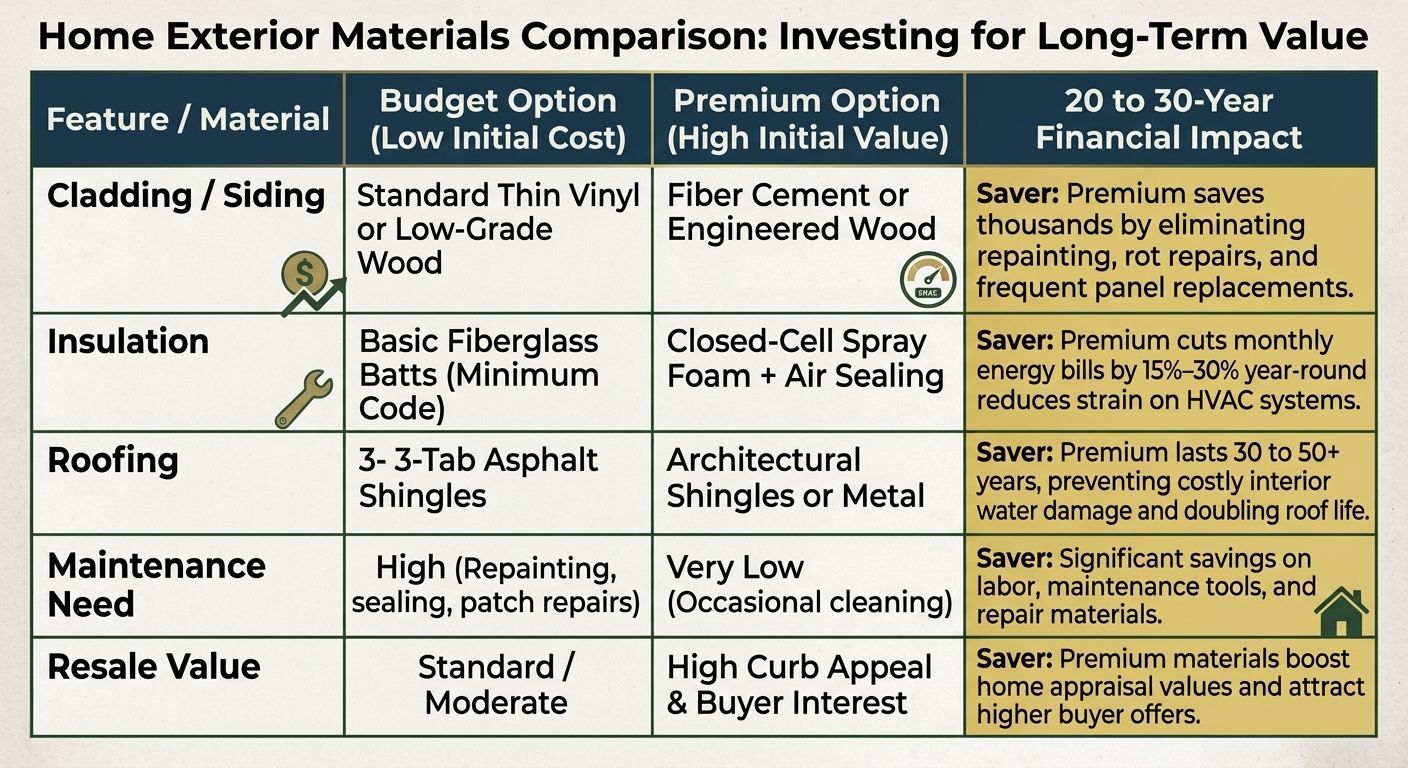
While premium siding may cost 30% to 60% more upfront than standard vinyl, it lasts twice to three times as long with almost zero maintenance costs. Over a 20-year period, the money saved on repainting and repairs alone often completely offsets the initial price difference.
2. High-Performance Insulation: Invisible Savings Inside Your Walls
Insulation is the hidden layer inside your walls, floor, and roof that controls temperature. You rarely see it, but you feel its impact on your wallet every single month when your energy bill arrives.
The Bargain Route: Minimum-Code Fiberglass Batts
Building codes set a minimum standard for insulation, but minimum standard means basic performance. Standard fiberglass batts (the pink or yellow fluffy rolls) are cheap and easy to install, but they have major drawbacks:
- They leave small gaps, cracks, and seams where air easily slips through.
- Over time, they can settle, sag, or compress, leaving unprotected spots inside your walls.
- If moisture touches fiberglass, it loses its ability to insulate and can trap water, leading to mold growth inside your walls.
When air leaks out of your home, your heating and air conditioning units have to work overtime to keep the house comfortable. This causes higher energy bills and wears out your expensive heating and cooling equipment much faster.
The Premium Choice: High-Density Spray Foam and Rigorous Air Sealing
Investing in premium insulation—such as closed-cell spray foam or high-performance rigid foam boards coupled with comprehensive air sealing—creates an airtight blanket around your house.
- Airtight Thermal Envelope: "Thermal envelope" is simply the continuous barrier that keeps outdoor temperatures outside and indoor conditioned air inside. Premium insulation fills every tiny crevice, stopping drafts completely.
- Moisture Barrier: Closed-cell foam does not absorb water. It acts as a vapor barrier, preventing condensation from forming inside your walls and protecting your home’s wooden frame from hidden rot.
- Structural Strength: Dense spray foam actually adds structural rigidity to your walls, making your home sturdier against strong winds.
The Long-Term Financial Impact
Heating and cooling typically account for over 40% to 50% of an average home's monthly utility expenses. High-performance insulation can reduce your monthly energy bills by 15% to 30% or more every month. Over 10 to 15 years, those monthly savings pay back the upgrade cost completely—and after that point, the energy savings are pure profit in your pocket.
3. Roofing Materials: Your Home’s First Line of Defense
If your roof fails, the rest of your home is at immediate risk. Water entering through a leaking roof damages drywall, ruins insulation, rots ceiling joists, destroys flooring, and encourages dangerous mold growth.
The Bargain Route: Basic 3-Tab Asphalt Shingles
Standard 3-tab asphalt shingles are the cheapest roofing material available. While they meet basic requirements when new, they have a relatively short lifespan (often lasting only 12 to 15 years in harsh climates).
Basic asphalt shingles are thin and vulnerable to high winds, which can blow them off easily. Strong sunlight causes them to lose their protective granules quickly, leading to curling, cracking, and water leaks. Replacing a roof every 12 to 15 years gets very expensive very fast.
The Premium Choice: Architectural Shingles, Metal, or Synthetic Slate
Upgrading to premium roofing materials provides significantly better durability and protection:
- Architectural (Dimensional) Shingles: These are thicker, multi-layered asphalt shingles designed to withstand much higher wind speeds (often up to 130 mph) and last 30 years or more.
- Standing-Seam Metal Roofing: Metal roofs are extremely durable, fireproof, and shed snow and rain effortlessly. A quality metal roof can easily last 40 to 70 years with minimal maintenance.
- Synthetic Slate or Tile: Made from modern polymers, these offer the timeless luxury look of real stone or clay tile without the extreme weight or brittleness, lasting 50+ years.
Additionally, many modern premium roofing products feature "cool roof" technology—reflective coatings that bounce solar heat away from your attic, keeping your house cooler in the summer and lowering your air conditioning costs.
The Long-Term Financial Impact
Installing a cheap roof means you may have to replace it two or three times over the course of living in your home. Investing in a premium roof means you likely only pay for a roof
once. You avoid emergency leak repairs, interior water damage restoration, and frequent full-roof replacement costs.
Additional Hidden Benefits of Premium Exterior Materials
Beyond direct savings on repairs and energy bills, high-quality exterior materials offer several hidden financial and lifestyle perks:
1. Higher Home Resale Value and Curb Appeal
When potential buyers pull up to a house, the exterior creates their very first impression. Fiber cement siding, architectural roofing, and pristine stone accents signal that the home was built with care and quality. Homes built with premium exterior materials tend to appraise higher and sell faster because buyers know they won't have to spend money on immediate renovations or repairs.
2. Lower Homeowner Insurance Premiums
Insurance companies calculate premiums based on risk. Homes with fire-resistant siding, wind-resistant impact-rated roofing, and sturdy construction are far less likely to suffer major storm or fire damage. Many insurance providers offer discounts on annual premiums for homes built with high-performance exterior products.
3. Quieter, More Comfortable Indoor Living
High-density insulation and thick, quality cladding do more than block heat—they also block sound. If you live near a busy street, near an airport, or in an area prone to loud thunderstorms, premium exterior wall systems dramatically reduce outdoor noise, turning your home into a peaceful, quiet sanctuary.
4. Peace of Mind
Perhaps the biggest value of all cannot be measured in exact dollars: peace of mind. Knowing that your home can withstand a severe hail storm, a heavy snowfall, or intense summer heat waves without leaking, cracking, or breaking down gives you total confidence and stress-free living.
Making the Smart Choice for Your Dream Home
It is easy to focus on short-term price tags when building or renovating a home, but smart homeownership requires looking at the bigger picture. Choosing cheaper exterior materials might save you a little bit of money upfront on your construction mortgage, but it will cost you significantly more in maintenance, higher utility bills, stress, and early replacement costs over time.
By choosing high-performance insulation, durable cladding, and long-lasting roofing materials, you build a home that protects your wallet, conserves energy, holds its value, and stands strong for generations to come.
Ready to Build a Home That Stands the Test of Time?
Building a custom home is an exciting journey, and making the right material choices early in the process makes all the difference.
If you are planning to build, renovate, or simply want expert advice on which materials best fit your budget, location, and vision, the team at Custom Home Creations is here to help. We specialize in designing and building beautiful, high-performance homes crafted with quality materials built to last.
Contact Custom Home Creations today to schedule your consultation! Let's discuss your ideas, answer your questions, and build a home you will love living in—and feel smart about owning—for decades to come.